CytoRecovery Experiment Software
A purpose-built Windows application for the lab bench: researchers run an experiment on CytoRecovery’s proprietary generator hardware, record the microscope feed alongside the results, and reopen the whole run later.
Proprietary desktop software · not publicly distributed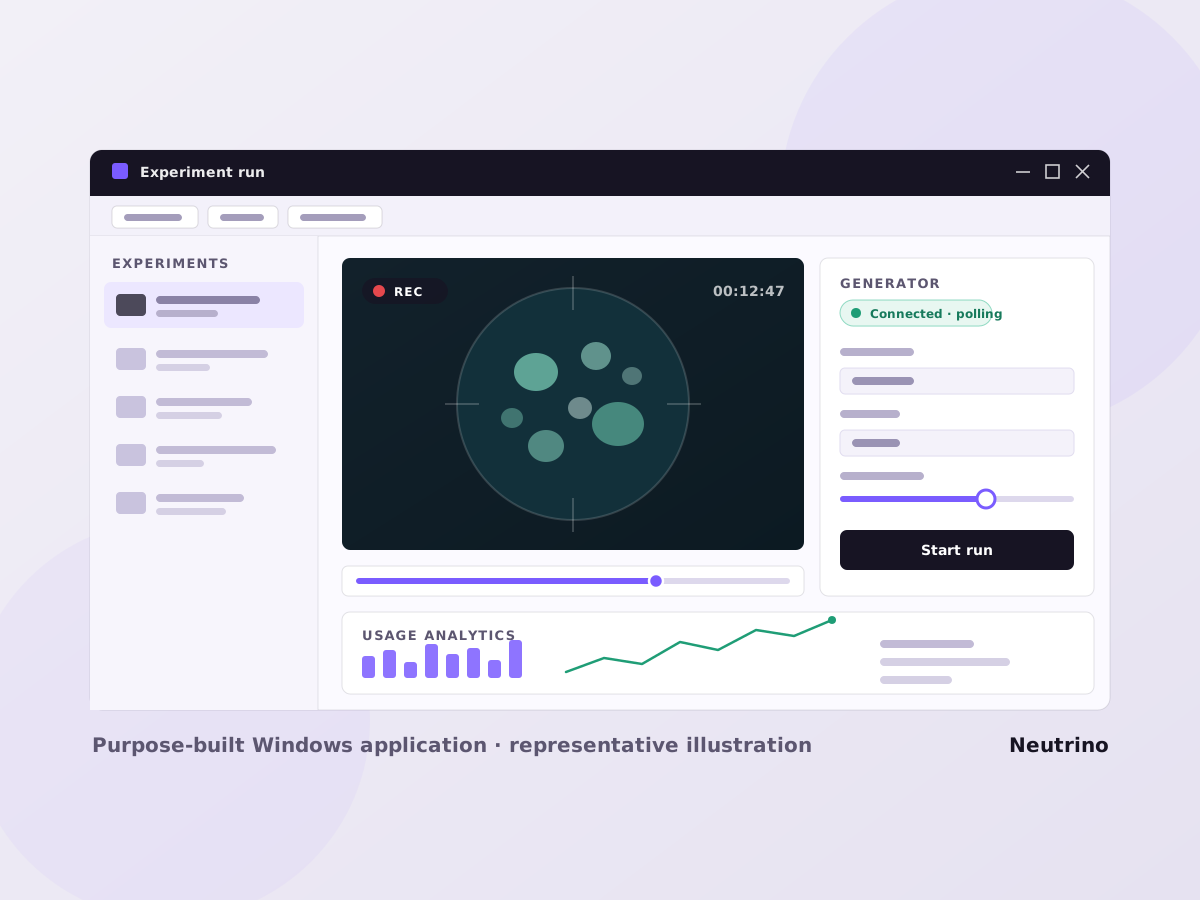
CytoRecovery · Blacksburg, VA
Windows desktop · WinForms
Bespoke software design, desktop development, hardware integration
The challenge
CytoRecovery’s platform runs on hardware the company engineered itself, including a generator driven by proprietary firmware. Nothing off the shelf could speak to that hardware, and nothing off the shelf could tie what the operator saw down the microscope to the run that produced it. Researchers needed one application on the lab computer that could control the instrument, capture the evidence, and keep the two together.
What we built
A Windows application engineered from the ground up in WinForms, speaking directly to the generator’s proprietary firmware. It drives the generator and polls it continuously, so the operator can see the live state of the hardware and adjust a run while it is happening rather than guessing at it.
Results are logged with a video recording of the microscope captured alongside them, so an experiment is never just a row of numbers. Each run is written to an experiment record that can be reopened and reviewed later, which turns a one-time bench observation into something a team can revisit and compare.
Analytics on real usage
The application also reports on its own use: who is working in the product and how they are working in it. That gave CytoRecovery a view of adoption across their users and of which parts of the workflow actually get exercised, which is the kind of signal a hardware company rarely gets once an instrument leaves the building.
At the board table
The engagement did not stop at delivery. Across the period we maintained the application and then carried it back into active development, we took part in CytoRecovery’s board meetings as the representative of the technology side of the company, reporting on the state of the software and on what the next round of work would actually take to build.
That is a different relationship than a vendor working a ticket queue. Product decisions got made with someone in the room who knew how the thing was built, and the direction that came out of those meetings was one the engineering side had already weighed for cost and feasibility.